- Michelle Pfeiffer calls out Bill Gates and Apeel, a produce-coating tech backed by Gates-linked funding, for threatening organic food integrity. The Oscar-nominated actress slammed FDA approval of the product, raising alarms on Instagram and calling for greater consumer transparency. Apeel and its investors defend the plant-based innovation aimed at reducing food waste.
LOS ANGELES, CA (TDR) — Michelle Pfeiffer just dropped a rare and pointed critique—and it’s not about Hollywood. The Scarface and Batman Returns star took to Instagram to accuse Bill Gates of supporting a technology that she believes could jeopardize the nation’s food supply. Her target: Apeel, an FDA-approved, Gates-backed coating designed to extend the shelf life of produce.
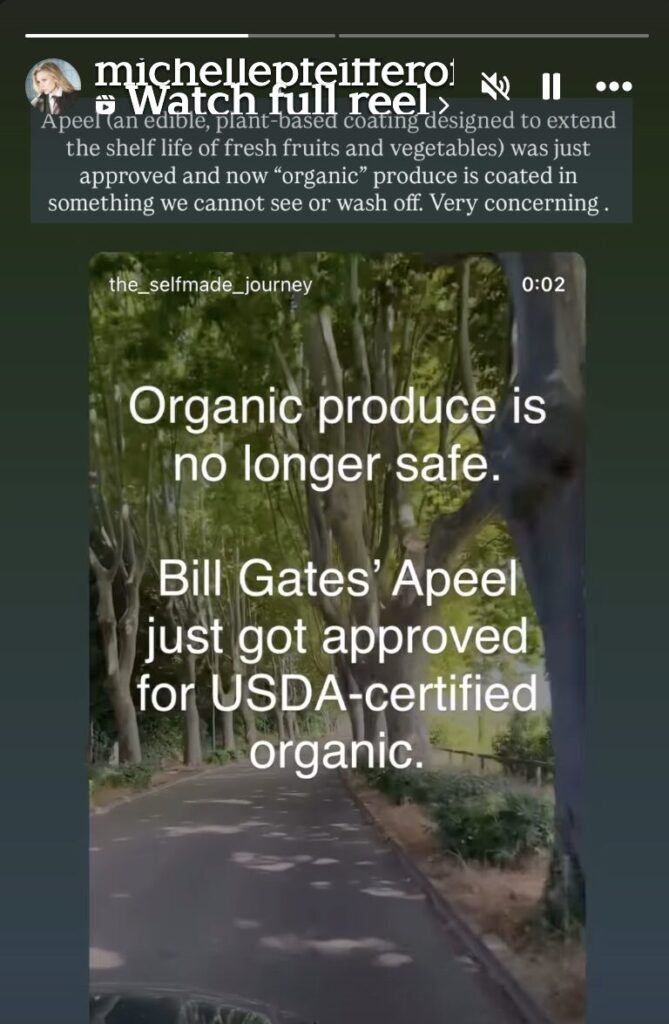
The 67-year-old actress reposted a viral reel claiming “organic produce is no longer safe”, blasting Apeel as an invisible, unremovable layer on fruits and vegetables. “Very concerning,” she wrote, warning her 3.5 million followers about the coating that is “now on organic produce” and linking it to Gates through his foundation’s early support of the product.
Pfeiffer Breaks Hollywood Silence
While most A-listers keep quiet on public health controversies, Pfeiffer didn’t hesitate to name names—linking the project to Gates, even though his foundation has no current role. The Bill & Melinda Gates Foundation gave Apeel’s founder, James Rogers, a $100,000 grant in 2012. Since then, Apeel has landed major investments from Andreessen Horowitz and other Silicon Valley heavyweights.
Fans familiar with Pfeiffer’s upcoming AppleTV+ series Margo’s Got Money Troubles, co-starring Elle Fanning, were surprised by the actress’s pivot from prestige television to produce politics.
Freedom-Loving Beachwear by Red Beach Nation - Save 10% With Code RVM10
What Is Apeel—and Is It Safe?
Apeel, according to its website, is a plant-derived coating that uses lipids found in produce to slow spoilage and retain moisture. It’s applied to items like apples, cucumbers, and avocados. The company says the coating is edible, odorless, tasteless, and made of substances already found in food.
“Apeel didn’t create these ingredients,” co-founder Jenny Du told Food & Wine. “All we did was use them in a different way.”
Critics, however, are demanding better transparency. Despite the company’s assertion that Apeel can be washed off with water, skeptics question whether consumers should have the right to opt out—especially when it comes to certified organic produce.
Consumer Trust vs. Tech Innovation
Since launch, Apeel claims it has prevented 166 million pieces of produce from going to waste, saved 1.8 billion gallons of water, and kept 64 million pounds of CO₂ out of the atmosphere. But Pfeiffer’s post sparked renewed scrutiny of the brand’s labeling practices and the larger question of who gets to decide what’s safe to eat.
Gates, whose ties to controversial figures like Jeffrey Epstein continue to dog his public image, has previously admitted that associating with the convicted sex offender was “a huge mistake.”
CLICK HERE TO READ MORE FROM THE THE DUPREE REPORT
As the story heats up, one thing is clear: Michelle Pfeiffer is no longer just a screen icon—she’s now a voice in the food transparency fight.
Are Hollywood elites finally waking up to the food-tech revolution—or fueling unfounded fears in the name of purity?
Follow The Dupree Report on YouTube
Freedom-Loving Beachwear by Red Beach Nation - Save 10% With Code RVM10
Join the Discussion
COMMENTS POLICY: We have no tolerance for messages of violence, racism, vulgarity, obscenity or other such discourteous behavior. Thank you for contributing to a respectful and useful online dialogue.